Wild Animal Welfare

Written by
Shelly Tsui
How far should we go when it comes to intervening to reduce wild animal suffering?
Key takeaways
- People generally believe that nature is inherently good, and thus should be left alone and free from any kind of human intervention (“Don’t play God!”)
- At the same time, trillions of animals on land, in the seas, and skies are suffering from predation, starvation and poor health from loss of food sources and habitats, and shortened lifespans (or extinction even) from diseases and harsh weather conditions
- Examples of wild animal welfare interventions include fertility and repopulation, programs, medical care and rehabilitation of sick or injured animals, and vaccinations
- Some scientists have gone further by modifying certain destructive species such as the New World screwworm and disease-carrying mosquitos
Introduction
When we imagine animals in the wild, most of us instinctively picture scenes that we have seen from inspiring nature documentaries such as Blue Planet (2001) and Planet Earth (2006). We remember wolves roaming vast forests, giraffes grazing in the savannah, and vibrant underwater shots of sea animals living lives that seem free and abundant. In this mental image, nature is working as it should, and wild animals are doing well. These idyllic images still shape how many people think about life in the wild.
However, this picture overlooks a large amount of suffering that occurs daily in nature. From the earliest stages of life, animals face severe risks that often involve intense suffering. The sources of animal suffering are diverse. Some result directly from human activities such as loss of habitats from land transformed into agricultural or living spaces, while others arise from natural processes beyond human influence. Common causes include extreme temperatures, starvation, dehydration, infectious disease, injury, parasitism, violent encounters with other animals, and chronic psychological stress.
To paint a picture of what happens out there, try to imagine the following examples: a newborn rabbit is exposed after her mother is killed, slowly dying from hypothermia and hunger. Or a young frog that grew up in a drying pond and gradually suffocates as the water disappears before it can complete metamorphosis. Such outcomes are common among animals with high reproductive rates. Even those who survive into adulthood may endure long periods of suffering before dying. For example, a wolf infected with mange may lose much of its fur, experience constant itching and pain, and eventually die from exposure or secondary infections after weeks or months of distress.
Indeed, animal suffering in its various forms is widespread rather than exceptional. For the animals experiencing them, the resulting pain and distress are likely comparable in severity to what humans or domesticated animals would experience under similar circumstances. As a result, many wild animals plausibly have lives in which suffering outweighs positive experiences.
Why should we care about wild animal suffering?
Some people who care about animals may wonder why wild animal suffering should be a priority and moral consideration, especially when the suffering is “natural”, and not stemming from human-driven activities such as factory farming, fishing, and animal experimentation. The common argument for why we should intervene in nature is because, just like humans and farmed animals, wild animals are sentient beings who can experience severe physical and psychological suffering. Unequivocally, suffering is bad and should be prevented as much as possible. This becomes a bigger moral importance and cause for action because of the massive scale of suffering.
What are some common examples of interventions that reduce animal suffering?
Around the world, people already intervene to help wild animals in various ways. For example, rescuing animals trapped by floods, treating injuries caused by wildfires, or rehabilitating animals affected by disease. In many such cases, intervention prevents deaths that would otherwise be prolonged and extremely painful. More broadly, life in the wild is highly unstable.
Common interventions include those from wildlife rescue organisations. These organisations regularly save animals that are caught in wildfires, oil spills, or injuries. An example organisation is Friends of Koalas, whose mission is to rescue koalas from various situations such as injury, being orphaned, or caught in wildfires. Other types of intervention include vaccination programs. Across Europe and North America, vaccines in the form of oral baits are used to protect foxes and raccoons from rabies, which lowers mortality and transmission to other animals.
Examples like these suggest that the assumption that the best response to wild-animal suffering is always non-interference is evidently incorrect. In many situations, intervention is impractical or risks causing additional harm. But there are also cases in which well-designed assistance could be feasible and plausibly reduce overall net suffering.
Larger scale interventions that involve modifying large-scale harm-inducing animals
Predation is a natural part of life for wild animals, but in some cases, the predation enacted by certain species causes an eye-watering level of suffering that requires urgent human intervention. One such well-known case is that of the New World screwworm. The screwworm causes severe suffering in animals (both wild and livestock) because its larvae invade and feed on the living tissue of warm-blooded animals. Flies lay eggs in open wounds or natural body openings, and when the larvae hatch, they burrow deeper into flesh instead of feeding on dead tissue like most maggots. This leads to intense pain, expanding wounds, secondary infections, and often death if untreated. Wild animals are especially vulnerable because they rarely receive medical care, allowing infestations to progress unchecked and spread rapidly through populations.
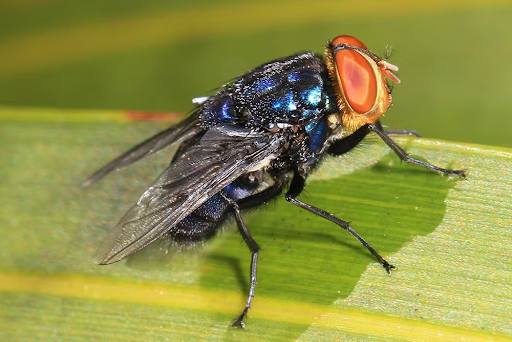
Figure 1: The new world screwworm fly
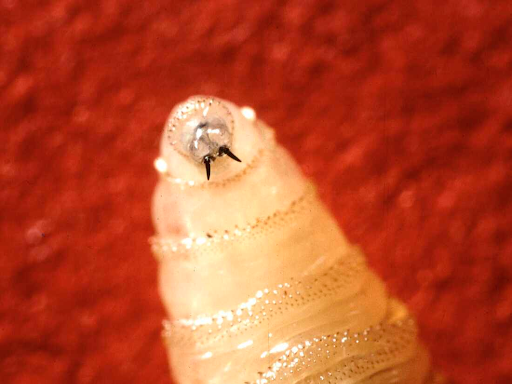
Figure 2: The New World screwworm
Several actions were taken to curb the screwworms’ devastating effects on animals. For example, the campaign against screwworms in Panama was a long-running public-health and agricultural effort to eliminate the New World screwworm fly, a parasite whose larvae infest and kill livestock and can harm humans. Beginning in the 1950s and intensifying from the 1970s, Panama, in collaboration with the US, used the Sterile Insect Technique (SIT). Millions of laboratory-reared male screwworm flies were sterilised with radiation and released, so when they mated with wild females no offspring were produced. Over time, the population collapsed. By 2006, screwworms were eradicated from Panama.
Another well-known and effective example of large-scale human intervention is the sterilisation of disease-carrying mosquitoes such as those that carry West Nile Virus, malaria, dengue, and zika. These diseases affect wild birds and non-human primates. Similar to the screwworm flies, male mosquitoes are reared in labs, sterilised with radiation, and then released into the wild to mate with female mosquitoes. The resulting eggs do not hatch, and over time the mosquito population in that area is reduced, thereby resulting in fewer cases of infections.
These interventions have potentially prevented billions, if not trillions, of individual animal suffering, and could not have been achieved without human involvement. The screwworm and mosquitoes are but one of many causes of wild animal suffering, but in the future, more factors (e.g., climate change, new diseases and viruses, and so forth) can emerge and might only be preventable through human involvement.
Further reading on the topic and resources:
- Animal Ethics (2020) - Introduction to wild animal suffering: A guide to the issues
- Effective Altruism - Building support for wild animal suffering
- Wild Animal Suffering (organisation)
EAN resources: