How AI applications are being used to improve animal welfare

Written by
Shelly Tsui
Key takeaways:
- AI applications are being explored to improve animal welfare in various contexts, such as livestock farming, animal health and care, and wild animal conservation
- Physical health is a promising area where AI applications are being used to improve animal welfare issues
- Key arguments as to why stakeholders are looking to use AI are accuracy, efficiency, cost-effectiveness, and scalability
Introduction
There has been a lot of growing interest in exploring how AI applications can be used to improve animal welfare. From farms to wildlife reserves, AI tools are helping people better understand, protect, and care for animals. These technologies can monitor animal health, track movement and behaviour, and even predict welfare issues before they become serious problems.
AI applications and the problems they address
One of the most promising areas is physical health, where AI systems are being used to detect illness, injury, or stress in animals more quickly and accurately than traditional methods. For example, AI can analyse images, sounds, or movement patterns to spot early signs of disease or discomfort.
There are various examples of how this is currently being explored, especially in agriculture, such as by using AI-powered data collection and analytical models to predict and monitor farmed chicken welfare, to catalogue and analyse facial expression for pain indicators in horses, or to detect certain markers of diseases among cows on time to ensure timely treatment.
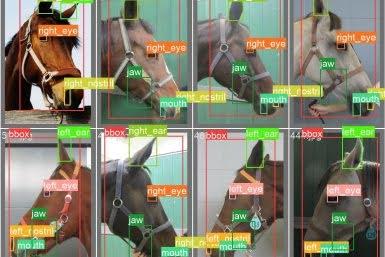
Figure 1: Images of horses with codes to indicate (credit: Utrecht University, 2024)
A big concern for farmed animals is ensuring that they are not suffering from pain, are lacking in sufficient water, nutrition, and healthy and clean living conditions, getting exposed to illness, or are unable to exhibit natural behaviours, to name a few welfare issues. There is not enough time or resources for stakeholders such as farmers to closely monitor their animals at all hours of the day, and many issues can be missed as a result, leading to more animal suffering. AI-powered surveillance cameras can be trained to detect early signs of illness in animals before they spread, and can produce a data-driven report so that farmers can react and intervene quickly, rather than relying on intuition. Beyond agriculture, AI applications are also being explored for wild animal conservation and welfare. For instance, AI-powered cameras can be used to monitor wildlife recovery, especially after devastating natural disasters such as fires. As it is not possible to have people serve as round-the-clock surveyors, AI can help speed up the review of footage and report results in a fraction of the time it would take a person to go through recorded footage of animals.
Why are AI applications being looked at favourably?
Many stakeholders such as farmers, veterinarians, researchers, and conservationists are turning to AI because it offers several practical advantages for improving animal welfare beyond current capabilities. It can:
- Increased accuracy
AI can increase accuracy by detecting patterns and problems that might be missed by the human eye. For example, AI systems can quickly analyse video footage or sensor data to identify early signs of illness, injury, or stress in animals. This in turn allows for quicker responses and more accurate care and interventions.
- Save time and costs
It can also save time and reduce costs by automating many routine tasks such as monitoring physical behaviour, or processing large amounts of health data. This then allows the people working with animals to focus their time and resources on where they are needed most.
- Enable large-scale monitoring and data collection
Another major advantage of AI is that it makes large-scale monitoring and data collection possible. In farms, shelters, and the wild, there can be hundreds if not millions of animals, so it is not practical or even possible to individually observe each one. AI applications can process information collected via cameras, drones, and sensors to provide a real-time picture of animal health and well-being of entire populations.
All together, AI can be a powerful tool to improve decision-making and planning. By collecting and analysing long-term data, AI systems can identify trends, predict welfare risks, and even suggest more effective interventions. This combination of efficiency, insight, and scalability means that AI can support better outcomes for animals while also benefiting the people responsible for their care. These advantages are especially important given the sheer number of animals worldwide and the growing demand for humane, sustainable, and evidence-based approaches to animal welfare.
Further reading on the topic and resources:
- Faunalytics (2025) - Automated Pain Detection In Farmed Animals: Promises And Problems
- Oxford University (2025) - Smart farming & artificial intelligence: how can we ensure that animal welfare is a priority?
- The Animal Echo (2025) - Smart Barns, Digital Kennels: How AI is quietly revolutionising animal care
- Zhang et al. (2024) - Advancements in artificial intelligence technology for improving animal welfare: Current applications and research progress.
Keen to explore how topics such as AI x animal welfare are a hot topic in the EA community and to learn more about how to approach pressing issues to maximise impact? Be sure to check out and join:
- Effective Altruism Netherlands - Introductory course on effective altruism
- Check out the EAN events page to meet up with like-minded people or relevant events
- Join our online community
- Two fellowships on the intersection between AI and animal welfare organised by Sentient Futures
- Receive a free 5-week impact guide in your mailbox by subscribing to our monthly newsletter
- Visit the global website on effective altruism for the latest topics and news on the community
This article is part of our animal welfare section.